

Shades of Change – The Science of Skin Pigmentation

300 

Assess pigmentary disorders safely and plan treatment with clinical precision.
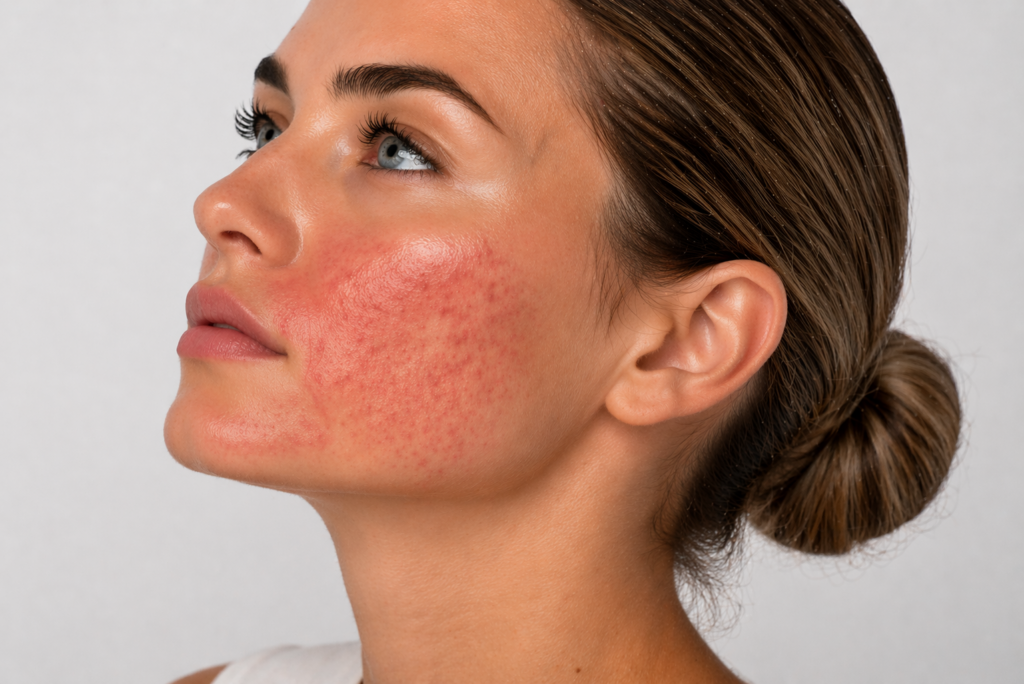
A foundation course in pigmentation science, clinical assessment, and risk-aware treatment planning for aesthetic practice.

Built for licensed healthcare providers (MDs, nurses, dentists). Available to anyone who wants the theory.

  • Lectures, tests, resources and expert-led teaching
  • Clinical frameworks and decision tools
  • Diploma and hands-on eligibility

This course is part of the following package(s):

Included Courses

Shades of Change – The Science of Skin Pigmentation

Description

What is this Course:

Shades of Change is an online, theory-based course that translates the science of melanogenesis into clinical decision-making. You will work through how pigment is produced and distributed, why pigment patterns behave differently over time, and how internal and external factors influence pigment expression in practice.

The course connects core mechanisms to the most common pigmentary concerns seen in aesthetic settings, including melasma, PIH, PIE, solar lentigines, and poikiloderma of Civatte. The focus is on assessment quality, risk screening, and structured planning that supports patient safety and realistic expectations.

Who Is this course for?

This course is designed for:

  • Anyone who wants a structured theoretical foundation in pigmentation science (note: hands-on clinical procedures remain dependent on local licensure and regulations)
  • Licensed healthcare providers (MDs, nurses, dentists) working with aesthetic skin treatments who want a strong, clinically grounded framework for pigmentation
  • Practitioners involved in consultation, pre-treatment screening, treatment planning, and post-treatment support where pigment control impacts both safety and outcomes
What this course gives you

You will leave with:

  • A clear mechanism-to-clinic framework for pigmentation
  • A practical structure for pigment consultation and risk screening
  • A way to differentiate common pigment presentations and plan accordingly
  • Tools for setting realistic expectations and integrating relapse prevention into planning
  • Downloadable reference materials you can use immediately in practice
Why this course is important

Pigmentary concerns are common, but they are rarely straightforward. Similar-looking presentations can have different drivers, different relapse risks, and different treatment sensitivities. When assessment is shallow or triggers are missed, pigment can worsen, become persistent, or relapse quickly.

This course gives you the foundational science and clinical structure needed to make safer decisions, plan with more consistency, and communicate more clearly with patients about timelines, risk, and expectations.
What you’ll learn

In this course, you will learn to:

  • Explain melanogenesis and pigment transfer in clinically relevant terms
  • Differentiate epidermal-leaning vs dermal-leaning pigment patterns and why it matters for planning
  • Identify key features and trigger profiles of melasma, PIH, PIE, solar lentigines, and poikiloderma of Civatte
  • Apply a structured consultation workflow across the full patient journey
  • Integrate skin type framing and PIH risk into pre-treatment screening
  • Build prevention and relapse-reduction into treatment planning
  • Relate inflammation, wound healing, and pigment formation to treatment outcomes and recovery
Course Structure

A structured video lecture format with clear progression:

  • Pigmentation biology and melanogenesis (mechanisms that matter clinically)
  • Endogenous and exogenous drivers (UV, HEV, inflammation, medications, hormones)
  • Clinical pattern recognition and common pigmentary disorders
  • Assessment workflow and practical classification for planning
  • Treatment planning principles, prevention strategies, and expectation setting

Includes a knowledge test and downloadable clinical reference tools.

After completing this module, you will be able to:
  • Explain the key mechanisms behind pigmentation in clinically relevant terms
  • Differentiate common pigmentary disorders and mixed presentations
  • Apply a structured assessment process (history, triggers, documentation, risk framing)
  • Integrate skin type and PIH risk into pre-treatment screening decisions
  • Plan treatment more safely through clearer classification and sequencing principles
  • Set realistic expectations and build relapse prevention into the plan

Structure, Certification & Hands-on-Training:

What this course gives you
  • A clear clinical framework you can apply across consultation, screening, and planning
  • Ready-to-use downloads that support documentation and decision-making
  • A safer way to approach pigment-prone cases through structured risk awareness
  • Practical prevention and expectation-setting guidance that reduces relapse drivers
Hands-on Training

Hands-on training: Not included.

What this means: This is a theory-based course focused on clinical reasoning, assessment structure, and treatment planning principles.

How it supports practice: It provides a foundation for safer decision-making in cosmetic and skincare treatment pathways where pigment control affects both safety and outcomes.Licensure note: Hands-on procedures require valid licensure in accordance with local regulations.

Who This Course Is Not For

This course is not a fit if you are looking for:

  • Hands-on procedural training or supervised treatment practice
  • A protocol-only course without underlying mechanism and assessment reasoning
  • Guidance that replaces medical evaluation where diagnosis is uncertain or red flags are present
Educational Resources & Tools

Included downloadable materials:

  • Pigment consultation checklist (history, triggers, prior treatments, adherence risks)
  • Assessment and classification worksheet (pattern, suspected depth indicators, trigger profile, risk level, plan)
  • Pre-treatment risk-screening checklist for pigment-prone patients
  • Photoprotection and trigger-management guide (UV/visible/HEV framing)
  • “Do / Avoid” decision-support table for common pigment pitfalls
  • Knowledge test + answer key with brief rationales
Clinical Application

You will be able to apply this framework in:

  • Consultation and diagnosis support (pattern recognition + trigger profiling)
  • Pre-treatment risk screening for pigment-prone patients
  • Treatment selection and sequencing decisions (skincare, peels, laser planning, combination pathways)
  • Post-treatment guidance focused on prevention, relapse reduction, and expectation management
Safety & Professional Standard
  • Patient safety is central throughout the course.
  • You will learn risk-aware decision-making that helps reduce avoidable complications such as worsened PIH, prolonged inflammation, uneven tone, and preventable relapse.
  • The course also clarifies boundaries for escalation and referral when diagnosis is uncertain or red flags are present.
What happens after you purchase the course?
  • Immediate access to all online lectures
  • Support from our team
  • Structured theory lectures and demo videos
  • Multiple choice assessments in each included course
  • Access to live group meetings
  • 1:1 digital meeting with academic instructor
  • Downloadable resources
  • You study at your own pace.

FAQ – Common Questions

Is this course only for licensed healthcare providers?

It is designed for licensed healthcare providers (MDs, nurses, dentists), but anyone can buy the course for the theoretical content.

Does the course include hands-on training?

No. This is a theory-based course focused on foundational science, assessment structure, and treatment planning principles.

Will this help with real clinical decision-making?

Yes. The course is built to support consultation, risk screening, treatment planning, and relapse prevention through a structured framework.

Do I need prior pigmentation training?

No. This is a foundation and essential module.

What will I receive after completing the course?

A knowledge test, plus downloadable reference tools such as checklists and assessment sheets.

Do I receive a diploma?

Yes, a digital diploma is provided upon successful completion.

How long do I have access?

You receive immediate access, with ongoing availability according to NAA platform terms.

Invest in your future

Take the first step towards mastering aesthetic medicine.
Get professional advice to excel in your education.

Lecturer

Siril Engh Gundersen

Siril Engh Gundersen is a licensed skin therapist with more than 20 years of experience in dermatological treatments, clinical work, and professional education, having taught at Senzie Akademiet and led advanced training programs for several leading brands and clinics, where she combines deep theoretical knowledge with practical, treatment-oriented insight.

Read more
Shopping Basket
Shades of Change – The Science of Skin PigmentationShades of Change – The Science of Skin Pigmentation

300 Add to cart
Scroll to Top